
Hormone health · Functional medicine
Hormones &
Metabolism:
Looking Beyond
the Numbers
Your hormone results may be available, but the reason you still feel unwell may be less clear.
Fatigue, changes in sleep or weight, hot flashes, low libido, and shifts in mood can have different explanations. Understanding how symptoms, health history, medications, and laboratory findings fit together helps determine what deserves attention next.
Begin with a complimentary 15-minute conversation.

Does this sound familiar?
When your body no longer feels predictable.
You may be sleeping poorly, experiencing unexpected weight changes, or feeling unusually tired despite having made changes to your routine. Sometimes hormone findings offer a clue; sometimes the explanation lies elsewhere.
Persistent fatigue or low energy
Weight or blood-sugar changes
Thyroid-related concerns
Restless sleep or night sweats
Hot flashes or cycle changes
Mood or temperature changes
Brain fog or difficulty concentrating
Low libido or sexual changes
Hair or skin changes
These concerns can have several causes, and symptoms alone do not establish a hormone imbalance.
The question behind the results
A hormone result is one piece of evidence.
What matters is how it fits the whole picture.
Perhaps your results were described as normal, yet the symptoms continue. Or treatment has helped in some ways while other concerns remain.
A clearer direction begins with what has already been measured, what those findings can explain, and what remains unanswered.
What you receive
A clearer picture.
Specific next steps.
Your concerns are considered in the context of your medical history, treatment decisions, and existing results. Additional evaluation is considered when it can help answer a meaningful clinical question.
Your history, connected
Symptoms, menstrual or menopausal history, hormone medications, previous laboratory findings, supplements, and responses to earlier treatments are reviewed together.
Results interpreted in context
Thyroid, reproductive-hormone, metabolic, and related findings are examined for what they establish, what remains uncertain, and whether targeted testing could help.
A written direction for care
You receive a summary of relevant findings and prioritized recommendations, which may include nutrition, lifestyle, further testing, or coordination with the clinician managing your prescriptions.
An independent review can complement the care you already receive. Further evaluation and treatment are discussed before proceeding.
Hormones in context
Hormones work within a network of systems.
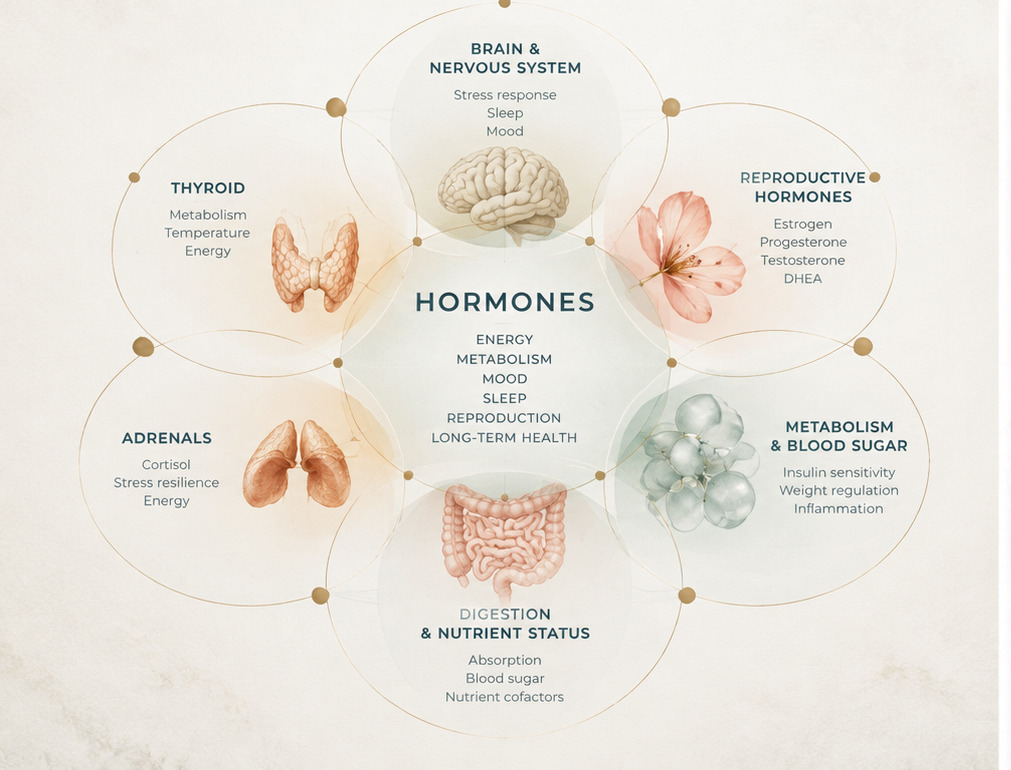
Conceptual illustration of related systems, not a diagnostic chart.
The relationships matter
Look beyond a single hormone level.
Reproductive hormones, thyroid function, digestion, nutritional status, blood-sugar regulation, sleep, and the stress response can influence how you feel. The same symptom may have several explanations, and changes in one area can coincide with changes in another.
That doesn’t mean every system needs a test. Your history and existing findings help establish which possibilities deserve closer attention, so the evaluation remains focused and relevant.
Testing with a purpose
The right test should answer a specific question.
Hormone measurements need context. Results may vary with the timing of collection, menstrual stage, age, medications, and the type of test. Standard medical evaluation and blood testing remain important for many endocrine concerns.
Selected hormone-metabolite or cortisol measurements can sometimes provide additional information, although their usefulness and limitations depend on the clinical question. Additional testing should make the next decision clearer.
Before ordering another test
What do we already know?
What remains uncertain?
Would a new result change the plan?
The answers guide which questions to investigate next, rather than beginning with a fixed list of tests.
Clinical reasoning
A plan built around your findings and priorities.
A thoughtful hormone evaluation begins with the changes you’ve noticed, the care you’ve already received, and the results you have in hand. The aim is to distinguish useful clues from findings that may be unrelated to your symptoms.
Your next steps may involve nutrition, sleep, stress regulation, acupuncture, carefully selected supplements, or further medical assessment. If you already use prescription hormone therapy, changes to that treatment should be discussed with your prescribing clinician.
DR. MAYA SARKISYAN, D.O.M.
Explore related care Functional Nutrition →Digestive Health & the Gut–Brain Connection →
Where to begin
Bring your questions and results. Leave with a clearer direction.
A complimentary conversation is the first step in deciding whether an independent clinical review is appropriate for your situation.
Complimentary 15-minute introductory conversation.